Rebuilding the forgotten cities
First,I read the “Preface” to Foucault’s The Order of Things as a list of “order.”
Each sentence categorizes, divides, and reconnects the world within language.My response transforms this movement into a list—a record of the construction of meaning through separation.
· List of order of the book
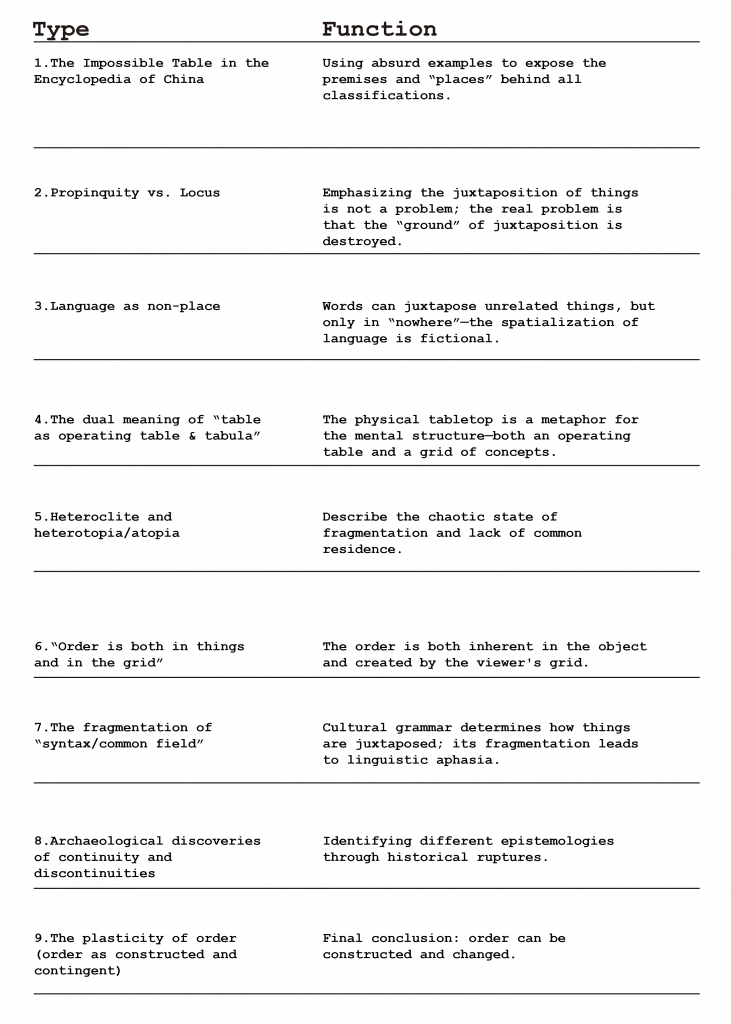
This profoundly influenced my approach to the San Simeon Church’s video archive. I no longer viewed it as a simple visual record, but rather as an “exercise in order”: Figures, close-ups, and distant views are not only layers of space but also layers of viewing and naming. I discovered that arrangement, labeling, and categorization are not simply methods of presentation but rather acts of design—actively creating meaning.
I revisited the archival footage of St. Simeon’s Church using the method of an “inventory.” Rather than analyzing it as architectural history, I wrote it down as a record—a catalog of fragments.
Each item is a unit of observation, a way of establishing connections between faith, war, and time. This inventory itself is a structure, a silent inquiry:
How is order designed, and how does it collapse?
· List of fragments
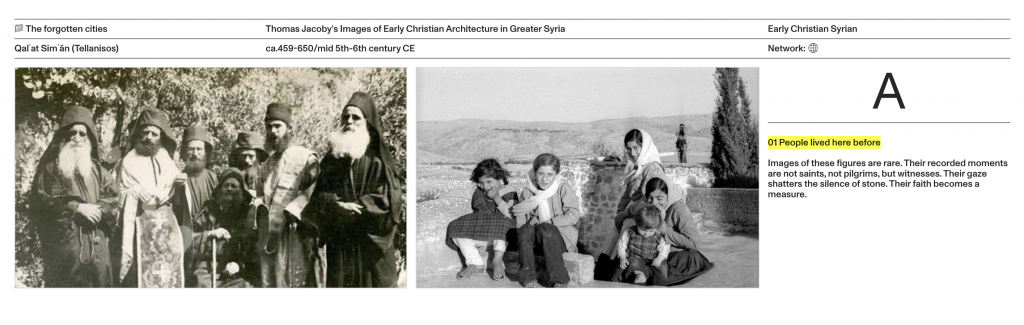
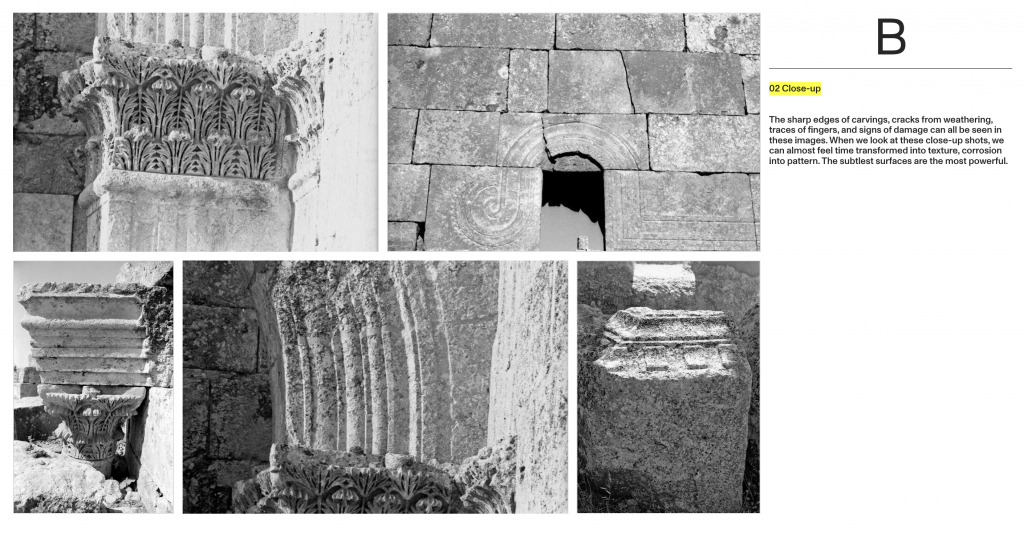
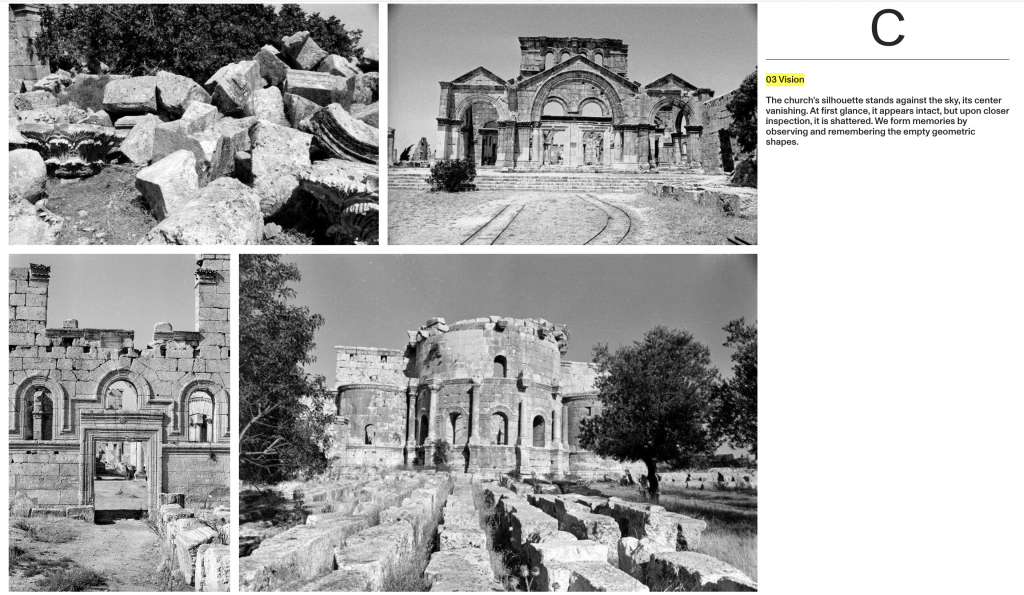
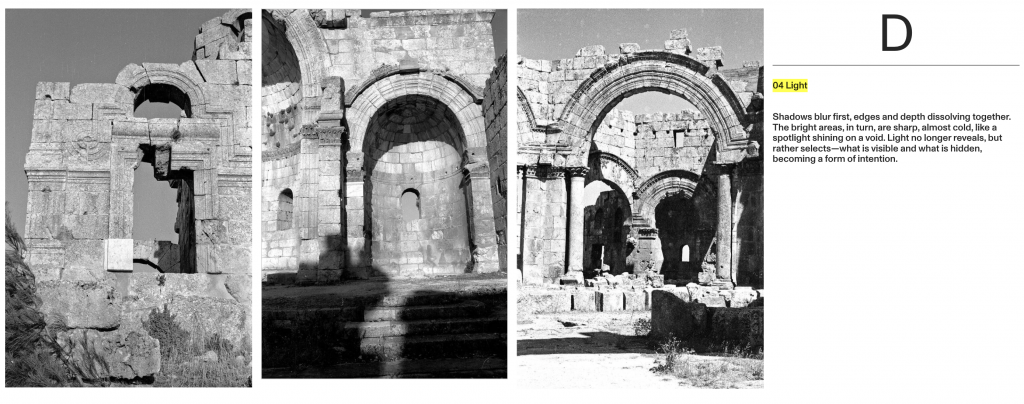
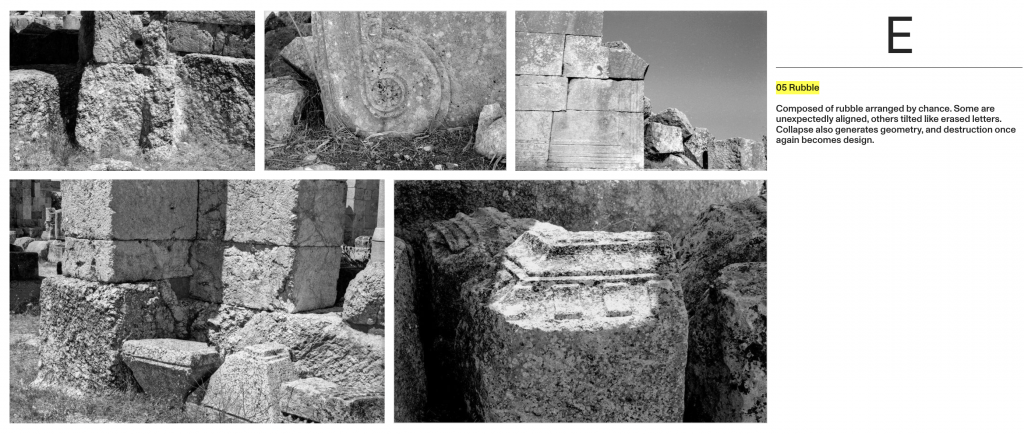

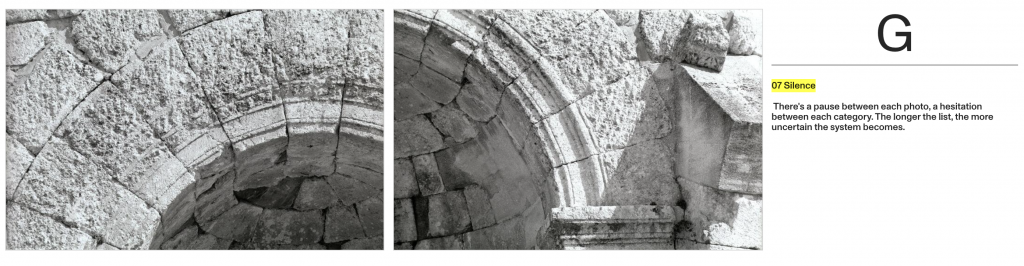
In my list, there’s no hierarchy among the fragments; their juxtaposition echoes Foucault’s concept of the “heteroclite”:Multiple orders flicker in the same space, unable to find a common home. Foucault, M. (1966)
Thus, as I transformed my research into lists, I realized that categorization itself is a form of design. The logic of rhythm, spacing, and white space mirrors the structure of my website—from figures to buildings, from intimacy to distant vistas. https://theforgottencities.cargo.site/
The act of making lists became a kind of reconstruction, not of the church itself, but of a way of seeing. Ultimately, what I learned wasn’t how to restore order, but how to expose its instability—the way language, image, and design are constantly reconstructed and disintegrated, and knowledge is seen in these temporary structures.
Reference list
Foucault, M. (1966). The Order of things: an Archaeology of the Human Sciences. London: Routledge.
Leave a Reply